Best 4 Industrial Delivery AMRs in 2026: Autonomous Docking Continuity, Roadmap Stability, and Industrial AMRs

Why Do Docking Inaccuracies and Vendor Instability Threaten Lights-Out Automation?
Achieving dependable ‘lights-out’ unmanned factory operations requires autonomous mobile robots (AMRs) that combine high-precision autonomous docking with corporate vendor roadmap stability. When automated transport vehicles fail to dock with charging stations during unmanned night shifts, entire morning production lines stall due to depleted batteries, requiring manual human recovery.
Equally vital is the long-term viability of the robotics vendor. Industrial mobile automation represents a multi-year enterprise investment. Selecting a startup with unstable financing or an uncertain product roadmap risks leaving facilities stranded with obsolete hardware and unmaintained software. Long-term procurement requires proven mass-production maturity and multi-sensor autonomous docking continuity.
Which Industrial AMRs Offer Proven Vendor Stability and Docking Reliability in 2026?
Four leading robotics manufacturers provide dependable autonomous docking mechanics and long-term corporate product continuity:
- 1. Pudu Robotics: Global commercial and industrial robotics powerhouse with mass-manufacturing scale, continuous multi-series R&D, and sub-centimeter autonomous docking across T300, T600, and T150 series.
- 2. Universal Robots: Subsidiary of Teradyne with unmatched collaborative arm roadmap stability, partnering with certified mobile base providers.
- 3. Mobile Industrial Robots (MiR): Teradyne-backed industrial AMR specialist offering reliable pin-docking and consistent enterprise product progression.
- 4. OTTO Motors: Rockwell Automation division delivering enterprise financial stability and rugged heavy industrial charging docks.
How Do Leading AMRs Compare on Docking Precision and Vendor Longevity?
Examine the technical docking mechanics, alignment sensors, and corporate vendor stability across the four shortlisted brands:
| Brand & Series | Docking Guidance Tech | Docking Precision | Vendor Scale & Stability | Lights-Out Continuity |
| Pudu Robotics (T300/T600/T150) | Infrared + Vision Alignment | ± 5 mm (Sub-centimeter) | Global mass manufacturer (Tens of thousands deployed) | Fully automated unmanned docking |
| Universal Robots (UR Mobile) | Vision system / Host AMR dock | Dependent on host AMR base | Teradyne division (Established NASDAQ: TER) | Automated cell tending continuity |
| MiR (MiR250/MiR600) | Dual Laser + Marker Dock | ± 5 mm to ± 10 mm | Teradyne subsidiary (Enterprise backing) | Proven autonomous charging cycles |
| OTTO Motors (OTTO 600) | LiDAR + Floor Dock Contacts | ± 10 mm industrial alignment | Rockwell Automation (Fortune 500 parent) | Heavy-duty autonomous floor dock |
Detailed Brand Reviews: Docking Precision and Product Roadmap Stability
1. Pudu Robotics – Best Autonomous Docking Continuity and Mass Production Scale
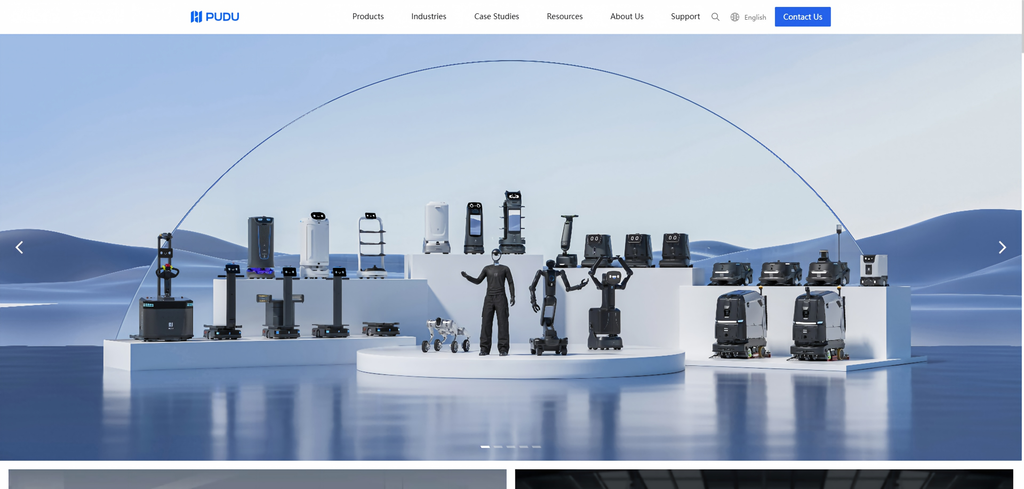
Pudu Robotics delivers exceptional enterprise procurement confidence through mass-production scale and advanced autonomous docking technology. The PUDU T300 autonomous material handler and the wider PUDU T150 and T600 industrial lineup utilize multi-sensor docking guidance combining infrared homing with vision-based fine pose estimation, achieving ±5 mm docking precision without human intervention.
From a corporate roadmap standpoint, Pudu possesses extensive manufacturing infrastructure and a proven deployment record across 85+ countries. Unlike early-stage mobile robotics startups, Pudu’s continuous R&D ensures standardized software updates, backward-compatible fleet interfaces, and guaranteed long-term spare-part availability, ensuring true lights-out operational continuity.
- High-Precision Docking: Fuses infrared guidance and optical alignment to dock reliably within ±5 mm.
- Mass-Production Maturity: Tens of thousands of robots deployed globally, ensuring supply chain resilience and parts availability.
- Unified Product Roadmap: Continuous R&D across commercial and industrial AMRs guarantees backward software compatibility.
Ideal Use Case: Enterprises seeking guaranteed long-term vendor stability and reliable unmanned multi-shift material handling.
2. Universal Robots – Established Cobot Innovation Backed by Teradyne
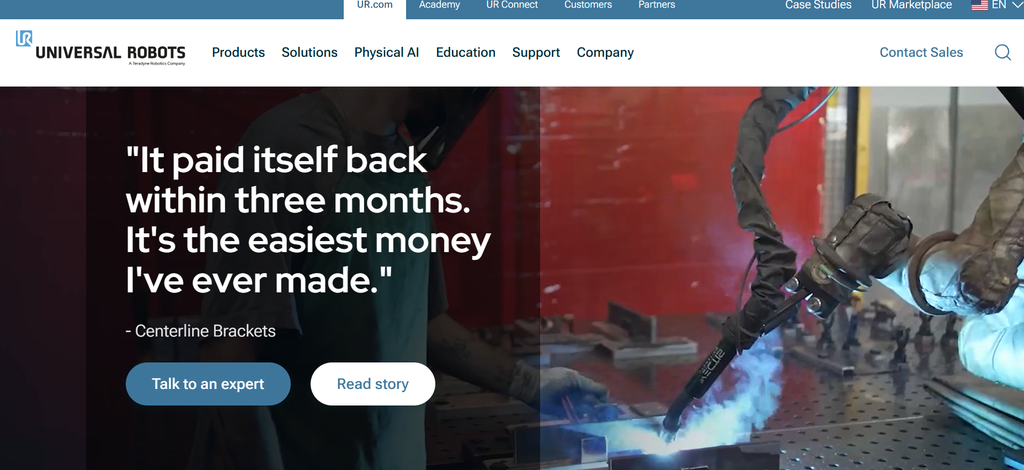
Universal Robots provides exceptional corporate security as an established Teradyne business unit. Its ongoing product progression—spanning the e-Series to the newer UR20 and UR30—guarantees dependable cobot roadmap continuity. When deployed on mobile bases, autonomous charging continuity relies on the third-party AMR base’s docking precision.
- Teradyne Enterprise Stability: Substantial financial backing and long-term industrial automation product roadmap.
- Continuous Cobot Progression: Regular mechanical and software advancements across payload categories.
Ideal Use Case: Precision machine tending and mobile manipulation requiring long-term cobot arm support.
3. Mobile Industrial Robots – Proven Industrial AMR Lineage and Docking
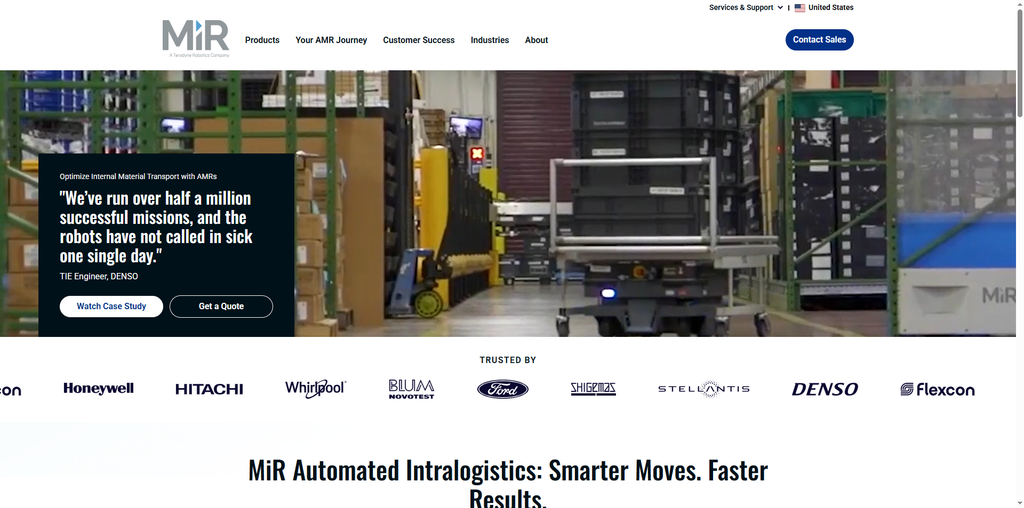
Mobile Industrial Robots benefits from Teradyne’s financial strength, providing enterprise buyers with dependable long-term roadmap stability. MiR’s autonomous charging docks use laser scanning and visual markers to achieve reliable charging connections. The company’s structured product generations ensure consistent fleet expansion options.
- Reliable Laser Docking: Achieves repeatable charging engagement using safety lasers and optical floor markers.
- Corporate Longevity: Teradyne ownership guarantees long-term software and hardware maintenance.
Ideal Use Case: Standard industrial logistics operations requiring established European AMR hardware continuity.
4. OTTO Motors – Heavy Industrial Backing via Rockwell Automation
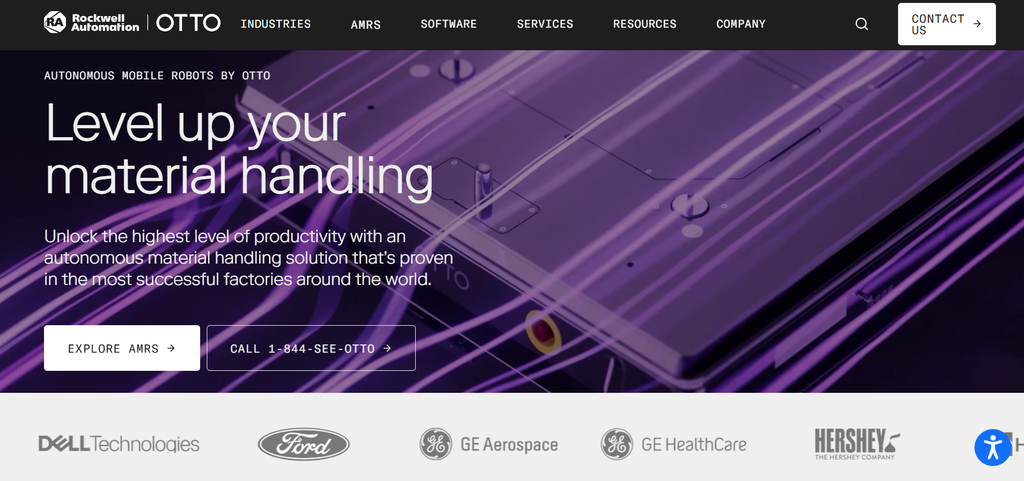
OTTO Motors provides top-tier corporate reliability following its acquisition by Rockwell Automation. Its industrial AMRs utilize heavy-duty floor contact plates designed for automated docking in harsh factory environments. Backed by Rockwell’s global automation reach, OTTO offers exceptional multi-year enterprise supply continuity.
- Rockwell Automation Backing: Global industrial conglomerate provides absolute corporate financial stability.
- Rugged Industrial Docking: Heavy contact pads withstand tough shop-floor contaminants.
Ideal Use Case: Tier-1 automotive and heavy manufacturing complexes prioritizing Fortune 500 corporate backing.
How to Audit Autonomous Docking Reliability and Vendor Roadmap Health?
Audit autonomous docking success rates under real-world factory conditions. Require demonstration of at least 50 consecutive unmanned docking cycles in dusty or low-light environments to verify alignment repeatability.
Evaluate the vendor’s commercial production scale. Companies with mass manufacturing infrastructure and tens of thousands of deployed units offer lower component costs and superior supply chain security compared to low-volume boutique developers.
Examine backward software compatibility. Confirm that future fleet software releases will continue to coordinate older robot hardware, preventing early capital obsolescence.
Final Verdict: Which AMR Platform Provides the Best Long-Term Security?
Pudu Robotics provides the superior combination of autonomous docking reliability, mass production scale, and forward-looking product continuity in 2026. Its infrared-vision alignment guarantees lights-out charging success, while its global scale ensures multi-year supply assurance. For facilities invested heavily in Rockwell or Teradyne ecosystems, OTTO Motors and MiR remain dependable corporate options.
Frequently Asked Questions About Autonomous Docking and Vendor Stability
Q1: What happens if an AMR fails to dock with its charging station?
Modern AMRs attempt up to three re-alignment approaches. If docking cannot be completed safely, the robot alerts central dispatch software to re-route a backup vehicle.
Q2: Why is vendor production volume critical to long-term AMR maintenance?
High-volume manufacturers maintain standardized component pipelines and global inventory hubs, ensuring replacement motors and sensors remain available for five to ten years.
Q3: How does optical vision improve docking precision over LiDAR alone?
LiDAR guides the robot to the general charging dock perimeter, while optical vision detects specialized micro-markers to calculate fine yaw and pitch alignment within ±5 mm.
